

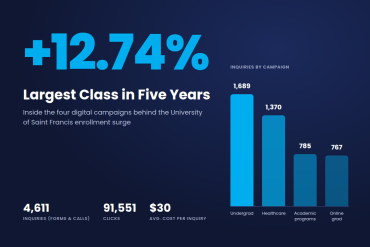
Inside the Campaign that Drove Saint Francis’ Largest Class in 5 Years
University of Saint Francis just welcomed its largest class in five years, with enrollment up 12.74%. Here's how our four digital campaigns across Meta, Google Ads, and programmatic helped make it happen, and the results behind them.
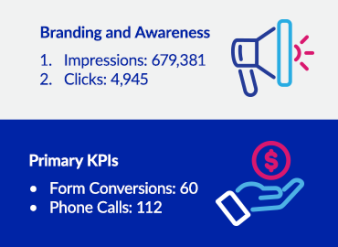
A Digital Marketing Campaign for Spring Transfers – The Calculate Way
Digital marketing for higher education enrollment: We do more, you get more! Check out the work we put into a single digital marketing campaign for spring transfers.

Get Ahead of Summer Melt
To those who work in enrollment management, the warmth of summer is often chilled by the reality of summer melt. Each year, a significant number of admitted students fail to enroll—10-40% per Harvard’s Center for Education Policy Research! Their reasons for doing so are as varied as the students themselves.

Summer Enrollment Opportunities: Don’t leave these prospects untapped
After May 1, your focus will rightfully turn to confirming the fall class. But there’s still time and potential to recruit new students—especially late-to-enroll first year students, transfer students, and adult learners.

Transfer Student Enrollment
When it comes to recruiting transfer students, enrollment professionals live with two contradicting truths: The transfer market offers considerable potential; and there’s rarely enough money (or time) to thoroughly engage and cultivate this population.

Adult Learners: An Untapped Market
To effectively reach and engage adult learners, we need to address their hopes and concerns in the marketing content (ads, landing pages, brochures and especially on the website). Chances are your institution has what these adult learners are looking for: affordable, concise and career-focused degrees or professional certificates. Make it easy for them to find the opportunities (and support) your institution offers.

Do This to Increase your Higher Ed Enrollment
If there’s one person who can increase enrollment, it’s Joel Wincowski. I’ve seen it firsthand, but his record speaks for itself. With more than 45 years of enrollment management experience, Joel has raised net revenue and enrollment at nearly every type of institution (public, private, flagship, religious, single-gender).

The Pressure of Spring: Confirming your Incoming Class
The start of the spring semester brings a familiar pressure to most admissions teams. Now is the time to focus on the all-encompassing task of confirming the incoming class. There are multiple strategies to this step beyond sending a welcome packet. Like enrollment management in general, they all have value (if done correctly). The challenge is having the time, while also maintaining the ongoing cycle of enrollment (more on that below).

The Transfer Market is on the Rise
The National Student Clearinghouse reports that transfer students are on the rise and now account for 13.2% of all undergraduates, up from 12.5% in 2022. Now is the time to start recruiting them for the spring semester. Here’s how and why.

How to Recruit Community College Students
There is no “one size fits all” approach to community college enrollment marketing but there are certain traits they share that can guide your strategy. Here are the steps you should take to craft your unique enrollment marketing strategy for your community college.
Enrollment Opportunity Ahead
It’s May 2022 and higher education is still recovering from the impact of COVID-19. If recent headlines and old patterns hold true, though, there’s an enrollment opportunity ahead. Here’s why, what, and how to prepare.

3 Ideas for Recruiting during Coronavirus
It’s possible to generate leads and drive yield during this time of social distancing, but it won’t be “business as usual.” We can no longer rely on the traditional face-to-face events like admitted student receptions, open houses, and college fairs. Instead, we need to shift our focus and resources to online strategies.

Looking for Transfers? Here’s How to Stand Apart in a Crowded Field
It’s transfer season, the time of year when 1/3 of the nation’s college students look to switch schools. Studies like the National Student Clearinghouse Research Center’s Signature Report estimate that 1.3 million students transfer each year. One point three million. That’s a big piece of the recruitment market. It’s no wonder so many institutions have amped up their transfer recruitment efforts. But has it paid off?
Finding a “Pocket of Potential” in Summer Enrollment
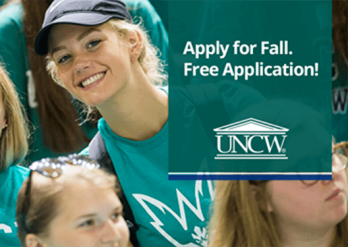
In our last post, we demonstrated how digital marketing campaigns can yield significant enrollment results — especially at key points of the recruitment cycle. In another example, we worked with the University of North Carolina, Wilmington (UNCW) to grow summer enrollment for transfer and late-to-enroll first-year students.

Decision Day and Beyond: How Digital Marketing Can Reach Prospects at Critical Points in the Enrollment Cycle
The recruitment cycle is fraught with make-it-or-break-it deadlines, perhaps none more critical than May 1, Decision Day. As prospective students weigh their acceptance and financial aid offers, colleges ramp up communications in an attempt to secure deposits.

Community Colleges Offer Strong & Specific Value: Tell It & Sell It through Success Stories
Inside Higher Ed’s recent report on the decline of community college enrollment hit home — especially because I was deep into writing an enrollment campaign for Three Rivers Community College at the time. Having spent several weeks interviewing students and alumni, I heard story after story showcasing the college’s strengths: quality academic and workforce programs, career success, student-faculty mentorship, affordability, support for work/life balance, etc.

Enrollment-Driven Higher Ed Websites: A Recruitment Solution
What if 75% of college-bound students told you that one piece of your marketing and enrollment strategy mattered more than anything else? What if 80% of high school seniors told you they judged your institution by this one component? Chances are you would make that one component a priority. That critical piece is your institution’s website.

Recruiting Adult Learners on Their Terms
Adult learners: They represent 40% of the higher education market and they are (generally speaking) the type of student that every institution wants: mature, focused, and committed to success. So why not make it easier for them to find your institution and enroll?
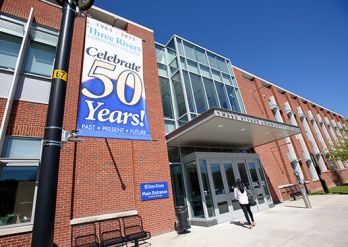
Community College Recruitment: Breaking old Stereotypes via Student Success Stories
Just as I was starting a new digital enrollment campaign for a community college, the National Student Clearinghouse Research Center released its report on the effectiveness of community colleges as pathways to degree completion. It’s always nice when the research matches the experiences of those who live the day-to-day reality — in this case, the students at Three Rivers Community College (TRCC) in Connecticut.

Part III: How an Enrollment-driven Website Can Serve Higher Ed Recruitment
As soon as an enrollment-driven website is up and running, you will see results. Prospects will complete forms (because they are highly targeted), which will flow into your admissions funnel. Your institution will come up in a prospects’ search (because of the SEO content). How many of these leads turn into applicants and accepts? Much of that depends on your enrollment team and their tactics. An enrollment-driven website will definitely bring in leads (good ones, because they are targeted to fit the institution), but the admissions staff needs to convert them.

Part II: How an Enrollment-driven Website Can Serve Higher Ed Recruitment
I worked for years in higher education marketing before I knew the value of an enrollment-driven website. It seemed like every 3-5 years we would “re-do” the website but it always felt like an untamed behemoth. Great marketing nuggets were there, but they were buried deep within.
How an Enrollment-driven Website Can Serve Higher Ed Recruitment
What if 75% of college-bound students in the U.S. told you that one piece of your marketing and enrollment strategy mattered more than anything else? What if 80% of high school seniors told you they judged your institution by this one component? Chances are you would make that one component a priority.

Step Up Summer Enrollment: How a Digital Campaign Can Stem Summer Melt & Inspire New Applications
May 1, which looms large in the minds of admissions professionals, has come and gone, marking the end of the recruitment cycle. Now we tally up our deposits, take a vacation, and then start preparing for the next cycle, right? Hardly.

Looking to Recruit Adult Students? Good News: They’re Telling Us How
Maybe (just maybe) recruitment would be easier if we listened to what college-bound students tell us – especially about what they’re looking for and where they look. The good news is, they’re forthright with the information. Study after study reveals the same basic facts: Institutional websites matter (perhaps more than anything else); prospective students search for schools online; they look for specific information, which they fully expect us to deliver.

Sure, March Madness Brings an Admissions Bump — If You’re a Big Name DI University
I wonder what it’s like in the Villanova admissions office these days. I always imagined that working enrollment at a Division I school — especially after an NCAA victory — would be a piece of cake: you know, opening envelope after envelope, plucking the best candidates, nothing but abundance!

How One University’s Website Became Its #1 Recruitment Tool
Though highly regarded for its health programs, this particular institution — a private Catholic women’s university — was struggling with enrollment. Calculate’s founders proposed a complete overhaul of the existing website utilizing inbound marketing strategies.