


Digital Marketing Campaign Data: What Stats Matter?
Question for enrollment professionals: What reporting statistics are the most useful when you’re evaluating the success of a digital recruitment campaign?

Do This to Increase your Higher Ed Enrollment
If there’s one person who can increase enrollment, it’s Joel Wincowski. I’ve seen it firsthand, but his record speaks for itself. With more than 45 years of enrollment management experience, Joel has raised net revenue and enrollment at nearly every type of institution (public, private, flagship, religious, single-gender).

Search Engine Optimization (SEO) for Higher Education Enrollment
The number and frequency of school closures isn’t all that surprising. At its core, it’s a simple supply and demand issue. There just aren’t enough motivated prospects to fill all of the vacant seats throughout the country and the impending enrollment cliff is only going to make matters worse.

Inbound Marketing for Higher Education
The number and frequency of school closures isn’t all that surprising. At its core, it’s a simple supply and demand issue. There just aren’t enough motivated prospects to fill all of the vacant seats throughout the country and the impending enrollment cliff is only going to make matters worse.

The Transfer Market is on the Rise
The National Student Clearinghouse reports that transfer students are on the rise and now account for 13.2% of all undergraduates, up from 12.5% in 2022. Now is the time to start recruiting them for the spring semester. Here’s how and why.

How much does it cost to recruit a college student?
According to Ruffalo Noel Levitz’s 2022 "Cost of Recruiting an Undergraduate Student Report," it costs: $2,795 per undergraduate student at a private school and $494 per undergraduate student at a public school.

Determining the Value of an Online Recruitment Campaign
How do you evaluate the success of a digital recruitment campaign, especially when using a third-party vendor? Which of the many metrics included in the campaign report show success in reaching the right prospects and moving them through the admissions funnel?
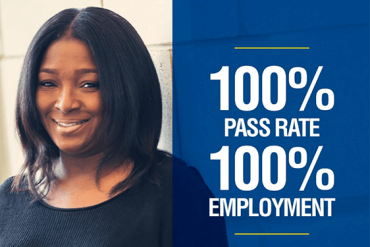
Enrollment Opportunity Ahead
It’s May 2022 and higher education is still recovering from the impact of COVID-19. If recent headlines and old patterns hold true, though, there’s an enrollment opportunity ahead. Here’s why, what, and how to prepare.

Enrollment Success During COVID
I want to share this particular digital recruitment campaign for two reasons: its success in delivering leads and what it says about messaging.

Recruitment During COVID: Evolving Strategies
Although the nation’s top institutions are experiencing a surge in applications, most of the colleges I know are facing COVID-related enrollment shortages. There’s no doubt the virus has placed intense strain upon an already-stressed system.

The #1 Thing You Can Do for Enrollment
The most effective thing you can do for enrollment is to update your website with enrollment-generating strategies. This will give it the ability to capture high-quality leads and move prospective students through the admissions funnel.
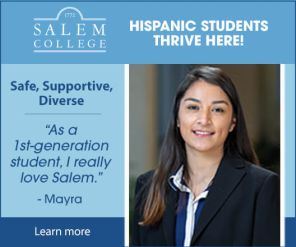
A Happy Enrollment Story in Unprecedented Times
May 1 came and went quietly, reiterating the fact that nothing is typical about the current admissions cycle. The impact of Covid-19 remains to be seen and there have been few positive enrollment reports — so, here’s one we’re happy to share and happy to have been part of.

Enrollment Marketing: Building your Fall 2020 Class Amid the Coronavirus Pandemic
Higher Education has the notorious distinction of being stuck in the past when it comes to enrollment marketing. Yup, nothing screams “cutting-edge” quite like a dining room table full of viewbooks, postcards, and unopened letters from “leading” colleges and universities throughout the country.

3 Ideas for Recruiting during Coronavirus
It’s possible to generate leads and drive yield during this time of social distancing, but it won’t be “business as usual.” We can no longer rely on the traditional face-to-face events like admitted student receptions, open houses, and college fairs. Instead, we need to shift our focus and resources to online strategies.

The Evolving Landscape of Student Recruitment
Last week, the Western Interstate Commission for Higher Education (WICHE) released its demographic report, Knocking at the College Door. Two findings, regarding the size and scope of future recruitment classes, will resonate with enrollment management professionals: 1.) The number of high school students across the nation has become stagnant, following a 30-year period of steady growth; 2.) The racial and ethnic mix of this pool has diversified dramatically (particularly with Hispanic and Asian populations) and is expected to do so through 2025, when students of color will represent a majority.

The Rising Cost of Student Recruitment: It Doesn’t Have to Be this Way
All research on how students search for college cites the institutional website as the “make it or break it” point early in the search. Consider this: 80% of college bound high school seniors say they judge an institution on its website. Furthermore, 60% equate the quality of a website to the quality of education provided by the institution.

An Enrollment Management Strategy to Offset the Federal Overtime Rule
On December 1, 2016, the new federal rule mandating that employees earning less than $47,476 per year and working more than 40 hours per week must be compensated for overtime goes into effect. This rule will have an impact on enrollment management teams throughout the country that rely extensively on their overworked admissions counselors to recruit class after class of students.

Inbound Inquiries are High Yielding Inquiries
Is anyone in higher education more overworked and underpaid than the college admissions counselor? Given the importance enrollment has on the health and stability of an institution, one would think that the most personal touchpoint in the prospect’s journey would be given more weight than the entry-level, revolving door approach the position of admissions counselor currently possesses.

Student Satisfaction and the Bottom Line
An honest assessment of a college’s student satisfaction level can offer valuable insight into student behaviors — and how those behaviors affect the bottom line.

The 2016 Internet Trends Report: 4 Takeaways for Higher Ed Recruitment
Mary Meeker’s 2016 Internet Trends report, delivered June 1 at Silicon Valley’s Code Conference, did not disappoint followers of her much-anticipated perspective. Rich with data, the report dove deep into the online behaviors and trends that affect the global market.

What Can Other Colleges Learn from Recent Closures? Staying Current in an Ever-Changing World
Bad news comes in threes. Whether you ascribe to such superstitions or not, this one felt true when faced with last week’s news that yet another small, liberal arts college is closing its doors. Kentucky’s St. Catharine College was the third such closure in as many weeks, following similar announcements by Burlington and Dowling Colleges.

From Enrollment Professional to Parent: My New Insights into the College Search Process
Ophelia approached her college search like a mindful consumer — she began by collecting data in order to make the best possible purchase. I know, I know … we cringe at the thought of higher education being reduced to a commodity, but from the student/family perspective it is one of life’s greatest purchases — in a market rich with options.

What Can Community Colleges do to Counteract Declining Enrollment? Turns Out Your Institutional Stories are your Best Ammunition
It wasn’t that long ago when community college enrollment was flourishing — or so we thought. Yet, a recent article in The Chronicle of Higher Education reveals an underlying long-term decline. In spite of the admissions increase brought on by the recession, community colleges have been steadily losing their piece of the higher ed market: From 40-44% in the period from 1980-2002) to the current 37.9%, an “all-time low.”

Recruiting a Shifting Demographic: Today’s Minority is Tomorrow’s Majority
In the near future, enrollment teams will be recruiting a different student population — one that is predominately “minority.” How near? By the time this year’s recruits graduate from college, more than half of the nation’s children will be part of a minority or ethnic group.

Higher Ed Recruitment: Can We Help Ease Students’ Stress?
Today, students apply to multiple schools (College Board cites 5-8) meaning for each one, they research, visit, gather recommendations, apply, etc. All this energy and expense takes a toll — on students, families, and on the school’s admissions staff.

Countering the Decline: How to Sell Small Liberal Arts Colleges to Gen Z
Today’s students, members of Generation Z, are the first true digital natives. They are online not only to socialize, but to complete tasks — a key one being college search.